Solar Panels UK: The Complete Guide for 2025
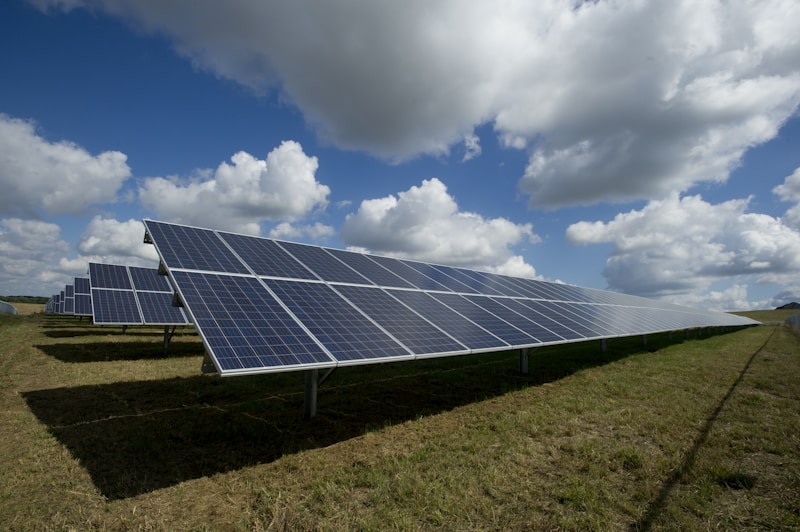
You've probably heard it before. "Solar panels don't work in Britain. It's too cloudy. It rains all the time. What's the point?"
Here's the thing. That's nonsense.
Germany installed more solar capacity than any country in Europe for years. Germany isn't exactly known for tropical sunshine. The UK gets similar solar irradiance to Germany. And British electricity prices are now among the highest in Europe.
The maths works. Over 1.3 million UK homes already have solar panels. They're not all fools.
This guide covers everything you need to know about going solar in Britain in 2025.
How Solar Panels Work in the UK
Solar panels don't need blazing sunshine. They need light. Britain gets plenty of that, even on overcast days.
When daylight hits photovoltaic cells, it knocks electrons loose. That movement creates direct current (DC) electricity. An inverter converts it to alternating current (AC) that your home uses.
On a bright summer day, a typical British system generates 30-40 kWh. On a grey December afternoon, maybe 3-5 kWh. Average it out over the year, and you get solid, predictable production.
Annual Production in Britain
A 4 kW system (10-11 panels) in the South of England generates roughly 3,400 kWh annually. The same system in Scotland produces about 3,000 kWh. Northern Ireland and Wales fall somewhere between.
For context, the average UK household uses 2,700-3,100 kWh per year. A properly sized solar system can offset most or all of that consumption.
The Winter Question
Yes, production drops in winter. December and January are the weakest months. Your panels might generate 10% of their annual output across those two months combined.
But summer overproduction compensates. In June and July, your panels produce far more than you use. Export the excess via the Smart Export Guarantee, bank credits with your supplier, or store it in a battery for evening use.
Over 12 months, the system pays for itself. The seasonal variation matters less than you'd think.
Solar Panel Costs in 2025
Here's what installations actually cost right now:
| System Size | Panels | Average Cost | Price Range |
|---|---|---|---|
| 3 kW | 7-8 | £5,500 | £4,800-£6,200 |
| 4 kW | 10-11 | £7,100 | £6,000-£8,500 |
| 5 kW | 12-14 | £8,400 | £7,200-£9,800 |
| 6 kW | 15-16 | £9,800 | £8,500-£11,500 |
These prices include the 0% VAT on residential solar installations, which runs until March 2027. Before the VAT exemption, a £7,000 system would have cost £8,400.
Battery storage adds £2,500-£10,000 depending on capacity:
- 5 kWh battery: £2,500-£4,000
- 10 kWh battery: £5,000-£7,000
- Tesla Powerwall (13.5 kWh): £8,000-£10,500
- GivEnergy All-in-One (9.5 kWh): £6,000-£8,000
What Savings Can You Expect?
The maths depends on your electricity rate, your usage pattern, and how much you export.
Current Electricity Prices
The October 2025 price cap sets the unit rate at approximately 24.5p per kWh. But prices have fluctuated wildly. In early 2023, caps exceeded 30p. In 2024, they dropped briefly before rising again.
The direction is clear: electricity will cost more in the future, not less. North Sea gas is depleting. Network upgrades cost money. Wholesale prices remain volatile.
Calculating Your Savings
Let's work through a real example:
4 kW system on a 3-bed semi in Birmingham
- System cost: £7,000 (including 0% VAT)
- Annual generation: 3,400 kWh
- Household consumption: 2,900 kWh annually
- Direct self-consumption: 50% (1,450 kWh used directly)
- Exported to grid: 50% (1,700 kWh)
Annual savings:
- Self-consumption: 1,450 kWh × 24.5p = £355
- Reduced standing charges: minimal
- SEG payments: 1,700 kWh × 12p = £204
- Total first-year benefit: £559
Payback period: approximately 12.5 years.
Add a battery to increase self-consumption to 70%, and the maths improves:
- Self-consumption: 2,380 kWh × 24.5p = £583
- SEG payments: 1,020 kWh × 12p = £122
- Total first-year benefit: £705
System cost with 5 kWh battery: £10,500. Payback: approximately 14.9 years.
That's longer than solar-only, but you also get backup power during outages and protection against future electricity price rises.
The Smart Export Guarantee (SEG)
The SEG replaced the old Feed-in Tariff when it closed to new applicants in 2019. It works differently.
Energy suppliers with 150,000+ customers must offer SEG tariffs. You get paid for every kWh you export to the grid. Rates vary dramatically:
| Supplier | Tariff | Rate | Notes |
|---|---|---|---|
| Octopus Energy | Outgoing Variable | Up to 15p | Fluctuates with wholesale prices |
| Octopus Energy | Outgoing Fixed | 4.1p | Stable, predictable |
| EDF | Export Flex | 5.6p | Fixed rate |
| E.ON | Next Export | 4.1p | Fixed rate |
| British Gas | Export & Earn | 4.5p | Fixed rate |
| Scottish Power | Smart Export | 3.5p | Fixed rate |
Over 25 years, the difference between 4p and 15p per kWh exported matters. On 1,500 kWh annual exports:
- At 4p: £1,500 lifetime
- At 15p: £5,625 lifetime
Shop around. You don't need to buy electricity from the same company that pays for your exports.
SEG Requirements
Two things are required:
- MCS certification: Your installation must be done by an MCS-registered installer
- Smart meter: Or a meter that records exports separately
If you don't have a smart meter, contact your supplier. They'll install one for free.
The 0% VAT Exemption
Until 31 March 2027, residential solar installations carry no VAT. Zero percent.
On a £7,000 system, that's £1,167 you don't pay. The discount applies automatically—your installer quotes VAT-free prices. No claiming anything back.
Battery storage installed with solar also qualifies. Installing a battery later, separately? You'll pay 20% VAT. Consider adding storage from the start if you think you'll want it eventually.
ECO4 and Free Solar Schemes
The Energy Company Obligation (ECO4) scheme can provide fully-funded solar panels for eligible households.
Eligibility typically requires receiving certain benefits:
- Universal Credit
- Pension Credit (Guarantee Credit)
- Income Support
- Income-based Jobseeker's Allowance
- Income-related Employment and Support Allowance
- Child Tax Credit (with income under £16,480)
- Working Tax Credit (with income under £16,480)
- Housing Benefit
Even without these benefits, some households qualify through flexible eligibility if your local council identifies you as fuel-poor or vulnerable.
ECO4 runs until March 2026. Not everyone who applies gets solar—insulation often comes first as it's cheaper per carbon saved. But it's worth enquiring.
Will Solar Work on Your Roof?
Orientation
South-facing roofs generate the most power. East and west-facing roofs work too, producing about 15% less. North-facing roofs rarely make sense.
Many homes have suitable east-west orientations. Split your panels across both sides to capture morning and afternoon sun.
Shading
Shade kills solar output. A large tree, chimney shadow, or neighbouring building blocking your roof for hours daily significantly reduces production.
Modern microinverters and power optimisers help. They prevent one shaded panel from dragging down the whole system. But heavy shade throughout the day usually means solar isn't right for that roof.
Roof Condition
Solar panels last 25-30 years. Your roof should too, ideally. Installing on a roof that needs replacing in 5 years means paying to remove and reinstall the panels later—that's £1,500-£2,500 you'd rather avoid.
If your roof is borderline, some installers offer bundled packages including roof repairs or replacement. Worth exploring.
Planning Permission
Most domestic solar installations fall under permitted development and don't require planning permission. Exceptions include:
- Listed buildings
- Conservation areas (sometimes)
- Panels projecting more than 200mm from the roof
- Panels higher than the roof ridge
- Ground-mounted systems over 9 square metres
Your installer will advise. If planning permission is needed, factor in an extra 8-12 weeks and possible fees.
Finding a Reliable Installer
MCS Certification Matters
MCS (Microgeneration Certification Scheme) certification isn't optional if you want SEG payments. It also ensures your installer meets quality standards.
An MCS-certified installer has been independently audited. Their work complies with building regulations. They carry appropriate insurance. They'll handle the DNO (Distribution Network Operator) notification.
Use the MCS installer database to find certified companies in your area.
Getting Multiple Quotes
Always get at least three quotes. Prices vary 20-30% for identical systems.
Compare:
- Total installed price
- Panel brand and wattage
- Inverter type (string vs. micro)
- Warranty terms (panels, inverter, workmanship)
- Estimated annual production
- Timeline
Cheaper isn't always better. An installer who'll be around for warranty claims in 10 years matters more than saving £300 today.
Red Flags
- Pressure to sign immediately
- No MCS certification
- Vague about panel and inverter brands
- Quotes that seem too good to be true
- Won't provide references
- Disappears when you ask about warranty claims
What About Battery Storage?
Batteries store excess solar production for use when the sun isn't shining. In the UK context, they:
- Increase self-consumption (use more of what you generate)
- Provide backup during power cuts
- Enable time-of-use tariff arbitrage (charge cheap, use expensive)
Batteries make the most sense if:
- You're away during the day when solar production peaks
- Your electricity usage is heavily concentrated in evening hours
- You experience regular power cuts
- You have or plan to get an electric vehicle
Adding a battery typically extends payback by 2-3 years but provides greater independence and protection against rising rates.
Timeline for UK Installations
Typical timeline:
- Getting quotes and deciding: 1-4 weeks
- Site survey: Within 1-2 weeks of ordering
- DNO notification: 28 days (required before installation)
- Installation: 1-2 days
- MCS registration and SEG signup: 1-2 weeks
Total: 6-8 weeks from decision to generating. Some installers move faster if they've worked in your DNO area before.
The Bottom Line
Solar panels work in the UK. Over 1.3 million households have proven it.
At current electricity prices, a well-sized system pays for itself in 10-15 years, then provides 15+ years of low-cost electricity. Add a battery and you gain resilience against both outages and rate increases.
The 0% VAT exemption runs until March 2027. ECO4 funding ends March 2026. Electricity prices aren't getting cheaper. If solar makes sense for your home, waiting offers no advantage.
Get quotes. Run the numbers for your specific situation. The maths often surprises people.