Virginia Solar Guide 2025: Dominion Energy, Incentives & Costs
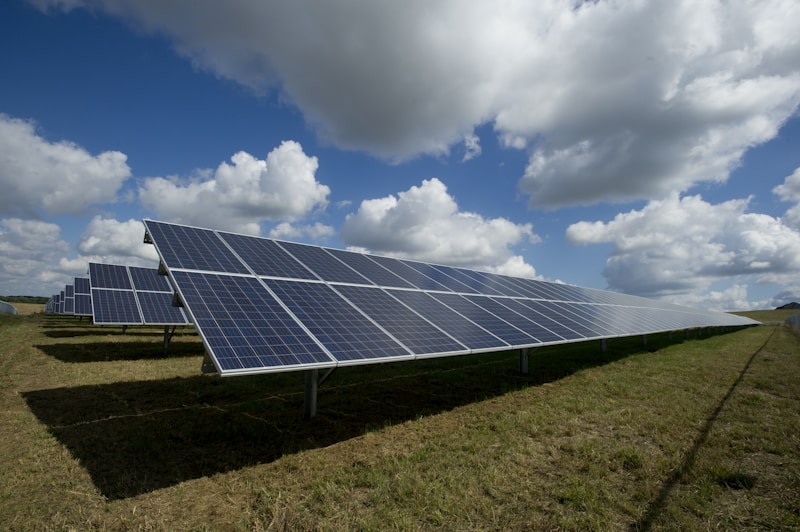
CRITICAL DEADLINE: 30% Federal Tax Credit Expires December 31, 2025
The 30% federal Investment Tax Credit (ITC) for residential solar ends on December 31, 2025. After this date, the residential credit drops to 0%. Virginia homeowners who act now can save $6,000-$9,000 on a typical installation. Don't miss this opportunity.
Virginia has quietly become one of the more interesting solar markets on the East Coast. The Commonwealth passed the Virginia Clean Economy Act in 2020, setting ambitious renewable energy targets and creating a more favorable environment for residential solar. While Virginia doesn't offer the flashy state incentives you'll find in Massachusetts or New Jersey, the fundamentals are solid: good sunshine, strong net metering, and the 30% federal tax credit that makes the numbers work.
I've spent the past few months talking to Virginia homeowners who've gone solar—from the suburban neighborhoods of Northern Virginia to the beach communities of Virginia Beach to the rolling hills of the Shenandoah Valley. Their experiences have been largely positive, with most reporting payback periods of 9-11 years and significant long-term savings.
This guide covers everything Virginia homeowners need to know: actual costs from recent installations, every available incentive, what to expect from Dominion Energy and other utilities, and real stories from homeowners across the state.
Why Virginia Works for Solar
Virginia's solar potential is better than many people expect. The state averages 4.3-4.7 peak sun hours daily—not Arizona levels, but solidly above the national average of 4.5 hours. Richmond and Virginia Beach get even more sun, approaching 5 peak sun hours on average.
What makes Virginia work for solar:
- Good solar resources: 4.3-4.7 peak sun hours daily means solid production from your panels.
- Full retail net metering: Dominion Energy credits excess production at full retail rate, maximizing the value of every kilowatt-hour.
- SREC income: Virginia participates in the PJM SREC market, adding $100-$300 annually.
- Property tax exemption: Many localities exempt solar from property tax increases.
- Federal tax credit: The 30% ITC applies through December 31, 2025, saving $6,000-$9,000 on typical systems.
- Solar rights: Virginia law protects homeowners from HOA solar bans.
While Virginia lacks a state tax credit, the combination of good sunshine, fair policies, and federal incentives creates respectable 9-11 year payback periods.
Solar Costs in Virginia: What You'll Actually Pay
Virginia solar installation costs run close to the national average. Northern Virginia (DC suburbs) tends toward the higher end due to labor costs, while rural Virginia and smaller cities often see lower prices.
| System Size | Before Incentives | After Federal Credit | With SREC Income (Year 1) |
|---|---|---|---|
| 6 kW | $16,200-$18,600 | $11,340-$13,020 | $11,140-$12,820 |
| 8 kW | $21,600-$24,800 | $15,120-$17,360 | $14,870-$17,110 |
| 10 kW | $27,000-$31,000 | $18,900-$21,700 | $18,600-$21,400 |
| 12 kW | $32,400-$37,200 | $22,680-$26,040 | $22,320-$25,680 |
Average installed cost runs $2.70-$3.10 per watt. Fairfax County and Arlington often see the highest prices ($3.00-$3.20/watt), while Hampton Roads and Richmond are typically more competitive ($2.60-$2.90/watt).
What Affects Your Specific Price
- Location: Northern Virginia commands premium labor rates. Richmond and Virginia Beach are more competitive.
- Roof complexity: Multi-story colonials (common in Virginia) require more labor. Single-story ranches are easier to install.
- Electrical panel: Many older Virginia homes need panel upgrades. Budget $1,500-$3,000 if your panel is undersized.
- Tree shading: Virginia has beautiful tree cover, but shading impacts solar production. Some installations require tree trimming.
Virginia Solar Incentives: The Complete Picture
Federal Investment Tax Credit: 30%
The federal solar tax credit is the foundation of Virginia solar economics. It allows you to deduct 30% of your total installation cost—equipment, labor, permits, and battery storage—directly from your federal income taxes.
On a $22,000 Virginia installation, that's $6,600 back. On a larger $30,000 system with battery backup, you're looking at $9,000 in federal tax savings.
Critical deadline: The 30% ITC expires for residential solar installations on December 31, 2025. Your system must be fully installed and operational by that date—not just contracted, but actually producing electricity. After 2025, the residential credit drops to 0%.
Virginia installations typically take 6-10 weeks from contract to completion. Northern Virginia permitting can be faster; some rural counties take longer. To meet the deadline safely, sign a contract by September 2025.
No State Tax Credit
Virginia does not offer a state-level solar tax credit. This is the biggest gap in Virginia's incentive package compared to neighboring states like Maryland (which has SRECs worth $50-$80 each).
The Virginia General Assembly has considered solar tax credits in recent sessions, but nothing has passed. For now, the federal credit does the heavy lifting.
Property Tax Exemption (Varies by Locality)
Virginia localities have the option to exempt solar energy equipment from property taxes. Many have done so, but you need to verify with your local tax assessor.
Localities with confirmed exemptions include:
- Fairfax County (80% exemption)
- Arlington County (full exemption)
- City of Alexandria (full exemption)
- Loudoun County (full exemption for first 5 years)
- City of Richmond (full exemption)
- City of Virginia Beach (full exemption)
Always confirm with your local Commissioner of Revenue before finalizing your solar decision.
Sales Tax Exemption
Virginia exempts the first $3,000 of solar equipment from sales tax. Beyond that, the standard 4.3% state sales tax applies. This saves $150-$200 on most installations.
SRECs: Modest But Real Income
Virginia participates in the PJM Regional Transmission Organization's SREC market. While Virginia's SREC prices are lower than Maryland's or New Jersey's, they still provide additional income:
- Current Virginia SREC prices: $10-$30 each
- One SREC = 1,000 kWh generated
- An 8 kW system produces ~10 SRECs annually
- Additional income: $100-$300 per year
SREC income is modest—it won't make or break your payback calculation—but over 25 years, it could add $2,500-$7,500 in total value.
Net Metering: Full Retail Rate
Virginia law requires investor-owned utilities to offer net metering for residential systems up to 25 kW. This is crucial for solar economics.
How Virginia net metering works:
- Excess electricity you produce flows to the grid
- You receive credits at the full retail rate
- Credits roll forward monthly throughout the year
- At year-end, excess credits are paid out at avoided cost (lower rate) or rolled to next year
The key is sizing your system to match annual consumption rather than overproducing significantly.
Virginia Utilities: Dominion, Appalachian, and Others
Dominion Energy (Most of Virginia)
Dominion Energy serves approximately two-thirds of Virginia, including Northern Virginia, Richmond, Hampton Roads, and much of the eastern part of the state. As the dominant utility, their policies matter most.
- Net metering: Full retail rate for systems up to 25 kW
- Interconnection: Generally 2-4 weeks after installation completion
- Rates: $0.12-$0.14/kWh residential
- Time-of-use: Optional TOU rates available
Dominion has significantly improved their solar interconnection process in recent years. Most residential installations are approved within 2-3 weeks of inspection.
Appalachian Power (Southwest Virginia)
APCo serves southwest Virginia, including the Roanoke area and the mountainous western portion of the state.
- Net metering: Full retail rate for qualifying systems
- Rates: $0.11-$0.13/kWh, slightly lower than Dominion
- Solar resources: Mountain areas may have more shading and weather variability
Electric Cooperatives
Rural Electric Cooperatives serve many rural Virginia areas. Policies vary by cooperative—some offer excellent net metering, others are less solar-friendly. Contact your specific cooperative before committing to a solar contract.
Real Virginia Homeowner Stories
Kevin and Lisa, Centreville (Dominion Energy)
"We moved to Centreville in 2018 and immediately noticed our electric bills were brutal—$280-$320 in summer with the AC running. When we started looking at solar in 2024, the tax credit deadline pushed us to finally act."
"We installed 10 kW in May 2024, cost $28,500 before the credit. After the 30% federal credit, our net cost was $19,950. Our Dominion bill now averages about $25—just the connection fee and a tiny bit of grid power in winter. We're saving roughly $2,400 per year."
"At $2,400 annually, payback is about 8.3 years. The panels are warrantied for 25 years, so we're looking at 16+ years of free electricity after that. Plus our house value went up—our neighbor's realtor said solar homes are selling faster in Fairfax County."
Robert, Virginia Beach (Dominion Energy)
"Virginia Beach gets great sun. I installed 8.5 kW in March 2024 for $24,200 before credits—$16,940 net. First year, my system generated 11,200 kWh, which was above the estimate. Dominion rates are about $0.13/kWh, so I'm saving $1,450 per year on the bill."
"I also registered for SRECs through Sol Systems. Getting about $220 per year from those. Total annual value is around $1,670, putting my payback at 10.1 years. Not as fast as some states, but Virginia Beach has good sun and I'm happy with the investment."
Robert's advice: "Get quotes from both Northern Virginia installers and Hampton Roads locals. I found prices were 10-15% lower from Hampton Roads companies, even after travel costs."
Jennifer, Charlottesville (Dominion Energy)
"I was skeptical because Charlottesville is in the foothills and we have lots of trees. But my installer did a detailed shade analysis and found my south-facing roof gets excellent exposure. I installed 7 kW for $20,100 before credits—$14,070 net."
"Production in year one was 8,100 kWh—slightly below estimate due to a particularly cloudy November. But I'm still saving about $1,050 per year on electricity. With SRECs adding maybe $150, total value is $1,200 annually. Payback will be about 11.7 years."
"For me, it was also about reducing my carbon footprint. Charlottesville has ambitious climate goals, and I wanted to do my part. The financial return is a nice bonus."
Detailed Cost-Benefit Analysis
Let's run through the complete numbers for a typical Virginia installation:
Scenario: 8 kW System in Northern Virginia
| Category | Amount |
|---|---|
| System cost (installed) | $23,200 |
| Federal tax credit (30%) | -$6,960 |
| Net cost after federal credit | $16,240 |
| Annual electricity production | 9,800 kWh |
| Dominion rate | $0.13/kWh |
| Annual electricity savings | $1,274 |
| Annual SREC income (10 SRECs @ $20) | $200 |
| Total annual value | $1,474 |
| Simple payback period | 11.0 years |
| System lifespan | 25+ years |
| Post-payback savings (years 12-25) | $20,636 |
Over 25 years, this system generates $36,850 in total value from a net investment of $16,240. That's a 127% return on investment—respectable, though not as dramatic as high-incentive states.
Common Questions From Virginia Homeowners
Q: Does my HOA have to allow solar?
A: Yes. Virginia's Solar Rights Law (Virginia Code 67-701) prohibits HOAs and property owner associations from banning solar installations. HOAs can establish reasonable aesthetic guidelines (like equipment placement or color matching), but they cannot prevent you from installing solar. If your HOA blocks your installation, you have legal recourse.
Q: What about community solar if I can't install rooftop panels?
A: Virginia has authorized community solar programs. You can subscribe to a share of a larger solar installation elsewhere and receive credits on your Dominion or APCo bill. This is a good option for renters, those with shaded roofs, or homeowners in condos.
Q: How long do permits take in Virginia?
A: Permit timelines vary significantly by locality. Fairfax County is relatively efficient (1-2 weeks). Arlington and Alexandria are similarly fast. Some rural counties can take 3-4 weeks. Ask your installer about typical timelines in your specific jurisdiction.
Q: Is battery storage worth it in Virginia?
A: For most Virginia homeowners, batteries are optional—net metering means the grid acts as your battery. However, Virginia does experience occasional severe weather (hurricanes on the coast, ice storms elsewhere) that causes outages. If backup power is important to you, batteries make sense. The 30% federal tax credit applies to battery storage too.
Q: What if I move before payback?
A: Studies show solar increases home value—typically $15,000-$20,000 for an average system. Virginia buyers are increasingly interested in solar homes, especially in Northern Virginia and Hampton Roads. You may recover most or all of your investment through higher sale price.
Virginia Installation Timeline
A typical Virginia solar installation follows this timeline:
Weeks 1-2: Site assessment, system design, and contract signing. Installer evaluates roof, electrical panel, shading, and designs a custom system.
Weeks 3-4: Permitting. Northern Virginia jurisdictions are generally faster (1-2 weeks). Some rural counties take longer.
Week 5: Installation. Most residential systems install in 1-2 days.
Weeks 6-8: Inspections and utility interconnection. Building inspector reviews the work, then Dominion or APCo approves grid connection.
Total: 6-10 weeks. To meet the December 31, 2025 tax credit deadline, sign a contract by September 2025 at the latest.
The Bottom Line for Virginia Homeowners
Virginia solar works, even without flashy state incentives. The combination of good sunshine, full retail net metering, SREC income, property tax exemptions (in most localities), and the 30% federal tax credit creates 9-11 year payback periods—followed by 15+ years of essentially free electricity.
Virginia isn't the best solar market in the country. States like Massachusetts, New Jersey, and California offer faster paybacks. But Virginia is a solid middle-of-the-pack market where solar makes financial sense for most homeowners.
The key factor now is timing. The 30% federal tax credit expires December 31, 2025. On a typical Virginia installation, that's $6,000-$9,000 in savings that simply won't exist in 2026. If you've been considering solar, this is the year to act.
Get quotes from at least three installers. Run the numbers for your specific situation. And if the math works—and for most Virginia homeowners it does—don't wait until it's too late. Virginia may not have Arizona's sunshine or New Jersey's incentives, but those panels on your roof will still generate clean, free electricity for decades to come.