Home EV Charging Just Got a Lot Cheaper: Federal Incentives, Smart Chargers, and Real-World Savings for Electric Vehicle Owners
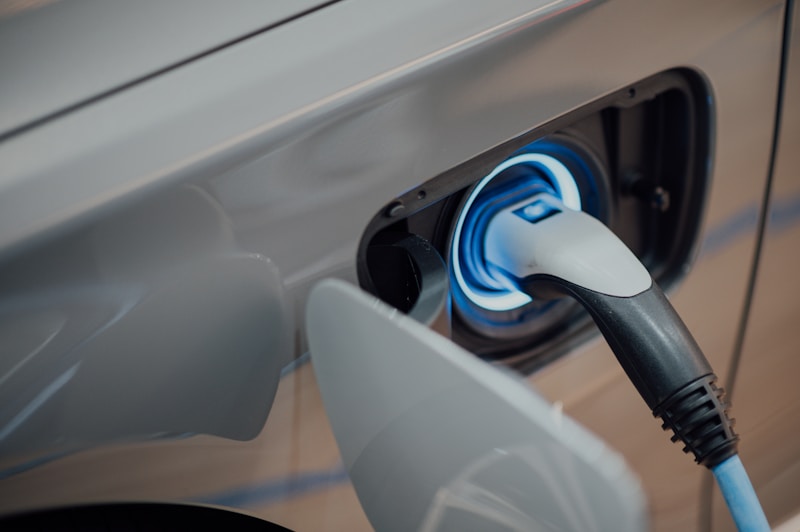
Three years ago, when the Weber family bought their first electric vehicle, they didn't think much about home charging. The Tesla came with a standard outlet adapter. They figured they'd plug in overnight and be fine.
They were wrong.
"Our Camry had a 500-mile range on a tank," explains Rebecca Weber. "The Model Y had 310 miles on a full charge. But we were only adding about 40 miles overnight with the regular outlet. By Thursday, we were running low and hunting for public chargers on our commute."
The solution was a Level 2 home charger, specifically a ChargePoint Home Flex that could add 37 miles of range per hour. The charger cost $699. The electrician charged $1,400 for a 60-amp circuit installation. Total: $2,099.
"It felt like a lot," Rebecca admits. "But then we did the math on gas savings. Our Camry cost about $220 monthly in fuel. The Tesla costs about $65 in electricity. That's $155 saved every month. The charger paid for itself in 14 months."
Now, with the federal tax credit reinstated by the Inflation Reduction Act, that same installation would qualify for up to $1,000 back on their taxes. The Webers' payback period would have been under 8 months.
The Federal EV Charger Tax Credit Explained
The Alternative Fuel Vehicle Refueling Property Credit (IRS Section 30C, for those who enjoy tax code bedtime reading) has had a complicated history. It expired. It got extended. It lapsed again. The IRA brought it back with modifications that matter for homeowners.
Here's how it works now:
Credit amount: 30% of charger and installation costs, up to $1,000 for residential installations. If your total costs are $3,333 or more, you max out the credit. Most home installations land between $1,500 and $3,000, so credits of $450-$1,000 are typical.
Effective dates: January 1, 2023 through December 31, 2032. You have time, but the IRA's residential solar credit expires earlier (end of 2025), so bundling solar, batteries, and EV charging in one project may make sense for tax planning.
Location restrictions: Your home must be in a "low-income community" or a "non-urban census tract" to qualify. This sounds limiting, but the IRS definitions are surprisingly broad. About 60% of US residential areas qualify. Rural and suburban areas are almost universally eligible. Even some urban neighborhoods qualify if incomes are below the threshold.
Check your address at the Department of Energy's Alternative Fuel Corridor website or ask your tax advisor to confirm eligibility.
Charger Options: What's Actually Worth Buying
The home charger market has matured considerably since EVs went mainstream. Here's what's available in early 2025:
Level 1 Charging (Standard Outlet)
Every EV comes with a Level 1 adapter that plugs into a regular 120V household outlet. It works. Slowly. Expect 3-5 miles of range added per hour of charging.
Level 1 is adequate if: You drive under 40 miles daily, have overnight to charge, and don't mind the occasional public charging session when you drive more.
Level 1 is frustrating if: You drive a longer commute, need the car ready on short notice, or experience the particular anxiety of watching your range slowly creep upward while knowing you need to leave in 6 hours.
Level 2 Charging (240V Hardwired or Plug-In)
Most home charger installations are Level 2 units running on 240V power, like your dryer or oven. Charging speeds range from 15-45 miles of range per hour depending on the charger's amperage and your vehicle's onboard charging capacity.
Popular options include:
ChargePoint Home Flex ($699): Adjustable amperage (16-50 amps), works with any EV, smart features including scheduling and energy monitoring through an app. Can plug into a NEMA 14-50 outlet or hardwire. Widely recommended by electricians for reliability.
Emporia Smart EVSE ($399-$499): Energy monitoring integrated with Emporia's home energy monitor. 48 amps max. Good value for the feature set. Slightly less polished app than ChargePoint.
Grizzl-E Classic ($459): Hardwired only, no smart features, but extremely rugged construction and excellent cold-weather performance. Popular in Canada and northern states.
Tesla Wall Connector ($450): For Tesla owners, provides the fastest home charging (up to 44 miles of range per hour on Model S/X) and integrates with Tesla's app. Works with non-Tesla EVs via J1772 adapter.
Wallbox Pulsar Plus ($599): Compact design, adjustable amperage, smart features. Qualifies for various utility demand response programs. Popular in Europe, growing in US market.
JuiceBox 40 ($549): 40-amp smart charger with utility integration features. Part of the Enel X network, which offers some grid services compensation programs.
Level 3 / DC Fast Charging
DC fast chargers are for commercial use. They cost $25,000-$100,000+ and require industrial electrical infrastructure. Not a home option. Mentioned only because salespeople occasionally try to upsell people on higher-powered home equipment that approaches Level 3 territory. You don't need it.
Installation Costs: What to Expect
The charger itself is often the smaller expense. Electrical work varies dramatically based on your home's existing infrastructure.
Best case ($200-$500 for installation): Your electrical panel has available capacity, it's located near where you want the charger, and a 240V circuit can be run in 25 feet or less. The electrician adds a breaker, runs wire, installs an outlet or hardwires the charger. Done.
Average case ($800-$1,500 for installation): The panel has capacity, but the run is longer (garage on the opposite side of the house), requires going through finished spaces, or needs conduit for code compliance. Wire and labor costs add up.
Worst case ($2,500-$5,000+ for installation): Your electrical panel is full or undersized. A subpanel needs to be added, or the main panel needs to be upgraded from 100 to 200 amps. The utility may need to upgrade your service entrance. Each layer adds cost and time.
Get quotes from 2-3 licensed electricians before committing. The range of pricing for identical work can be surprising.
Smart Charging: Where Real Savings Hide
The Webers learned something interesting after installing their ChargePoint charger: their utility offered a special EV rate of $0.04/kWh from midnight to 6am. Their regular rate averaged $0.14/kWh.
"We set the charger to only draw power during those hours," Rebecca explains. "Our electricity cost dropped from $65 monthly to about $25. That's $480 a year we weren't expecting to save."
This kind of optimization is increasingly common. Here's how it works:
Time-of-use rate enrollment: Many utilities offer TOU plans with significantly cheaper overnight rates. EVs are ideal TOU candidates because you can schedule charging during off-peak hours without inconvenience.
Dedicated EV meters: Some utilities install a second meter specifically for EV charging, allowing your car to charge at a super-low rate while your house stays on a standard plan. Pacific Gas & Electric's EV-A rate and Southern California Edison's TOU-EV-1 are examples.
Smart charger scheduling: Most Level 2 chargers with WiFi connectivity let you schedule charging windows. Set it once, and the charger handles the rest.
Vehicle-side scheduling: Most modern EVs have built-in charge scheduling too. You can set departure times and let the car decide when to pull power. Tesla's "Scheduled Departure" feature even preconditions the battery and cabin using grid power, saving range for driving.
Utility demand response: Some chargers (JuiceBox, Wallbox, Emporia) integrate with utility programs that occasionally pause charging during grid emergencies. Participation typically earns small annual credits ($20-$75).
Fuel Cost Comparison: Real Numbers
The electricity-versus-gasoline math varies by location, but directionally, it heavily favors EVs everywhere.
National averages:
- Gasoline: $3.15/gallon (January 2025 average)
- Electricity: $0.168/kWh (residential average)
For a typical sedan:
- Gas car: 30 mpg, 12,000 miles annually = 400 gallons = $1,260/year in fuel
- EV: 3.5 miles/kWh, 12,000 miles annually = 3,429 kWh = $576/year in electricity
Annual savings: $684, or 54%.
But that uses average electricity rates. With TOU optimization:
- EV charged at $0.06/kWh overnight: 3,429 kWh = $206/year
Annual savings versus gas: $1,054, or 84%.
For households that drive more (the national average is closer to 14,000 miles), or live in areas with higher gas prices (California, Hawaii, Pacific Northwest) or cheaper electricity (Pacific Northwest's hydro-heavy grid), savings can exceed $2,000 annually.
Solar + EV: The Combined Economics
Adding solar panels to the EV charging equation changes everything again.
The Kowalski family in Phoenix runs a common setup: 9 kW of solar, two EVs (a Tesla Model 3 and a Chevrolet Bolt), and a ChargePoint charger. Their solar system generates about 14,500 kWh annually. Their house consumes 11,000 kWh. Their two EVs consume about 6,000 kWh.
With net metering, the solar effectively covers everything. Their combined electric/fuel expense dropped from $4,200 annually (previous gas cars plus electric bill) to approximately $350 (minimum utility charges plus occasional public charging on road trips).
"We joke that we drive on sunshine," says Mark Kowalski. "It's almost literally true. The panels make electricity, the cars consume electricity, and we barely write checks to anyone anymore."
Their solar system cost $24,000 after the federal tax credit. Their EV charger cost $1,850 all-in (charger plus installation minus tax credit). Combined payback on the energy infrastructure: approximately 6.5 years. System lifespan: 25+ years.
Installation Considerations
Practical advice from homeowners and electricians:
Install more amperage than you think you need: A 50-amp circuit costs marginally more than a 30-amp circuit but provides significantly faster charging. If you might add a second EV later, or your current EV gets replaced with a faster-charging model, the extra capacity pays off.
Consider outlet placement carefully: The charger should reach your car's charge port without cable stretching. Different vehicles have ports in different locations (front left, rear left, rear right). If you have multiple cars, or might switch brands, mid-garage placement often works best.
Outdoor installations need proper ratings: If mounting outside, ensure the charger is NEMA 4 rated for weather resistance. Consider a small roof or enclosure to extend equipment life.
Ask about load management: If your panel is near capacity, some electricians can install load-sharing devices that reduce EV charging when other large loads (dryer, AC, oven) are running. This avoids expensive panel upgrades.
Pull permits: Electrical work requires permits in most jurisdictions. Good electricians handle this automatically. Be wary of anyone who offers to skip permitting to save money. Insurance claims and future home sales can be complicated by unpermitted work.
The Road Ahead
EV adoption continues accelerating. Over 1.4 million plug-in vehicles sold in the US in 2024, up from 1.1 million in 2023. About 10% of new car sales are now electric. By 2030, most analysts project 30-40% market share.
Each of those vehicles needs charging, and home charging is where 80% of EV charging happens. The infrastructure buildout is happening garage by garage, outlet by outlet.
For the Weber family, the transition is complete. They sold their Camry last year, replacing it with a Hyundai Ioniq 6. Their two EVs share one charger, alternating overnight. The public charging network is backup, not primary.
"We spent maybe $300 on public charging all year," Rebecca says. "Road trips, mostly. The rest is home charging at our cheap overnight rate. Between lower fuel costs and lower maintenance, we figure we're saving $4,000 a year compared to our old gas cars."
She pauses. "And honestly? The cars are just better to drive. The savings are almost secondary at this point."
With federal incentives available through 2032, and home charger technology mature and reliable, the barrier to entry has never been lower. For the 4% of American households with EVs, home charging is already standard practice. For the other 96%, the Webers' story may be a preview of what's coming.