The Complete Guide to Home Solar Panels in 2025
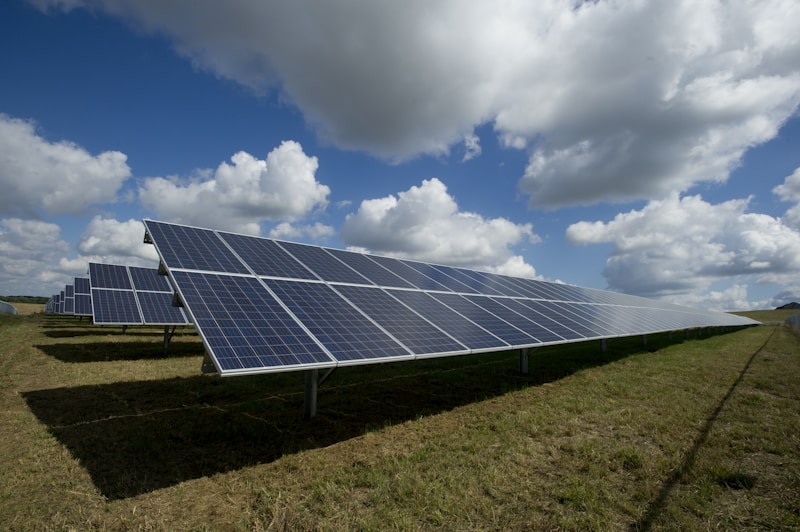
Let's get something out of the way right now. Solar panels aren't right for every home. Some roofs face the wrong direction. Others sit under tree cover that would take thousands to remove. And if you're planning to move in the next three years, the math probably doesn't work.
But here's the thing. For the right house, in the right situation, going solar is genuinely one of the smartest financial moves you can make. We're talking about locking in your electricity costs for 25 years while your neighbors watch their bills climb 3-5% annually.
This guide covers everything. How the technology works. What you'll actually pay. Whether your house qualifies. And how to find an installer who won't disappear when you need warranty work.
How Solar Panels Actually Work
Skip the physics lecture. Here's what matters.
Solar panels contain photovoltaic cells. When sunlight hits these cells, it knocks electrons loose. That movement creates direct current (DC) electricity. Your home runs on alternating current (AC). So an inverter converts the DC to AC.
That's it. Sunlight becomes electricity you can use.
The panels connect to your home's electrical system. When they're producing, you use that power first. Any excess flows to the grid. At night or on cloudy days, you pull from the grid like normal.
This back-and-forth gets tracked by your electric meter. In most states, it runs backward when you're exporting power. That's net metering, and it's why solar saves money even though you're still connected to the grid.
What's in a Solar System
A typical residential setup includes:
- Panels: Usually 15-25 for most homes. Each panel produces 350-450 watts.
- Inverter: Either one central unit or microinverters on each panel.
- Mounting hardware: Racks that attach panels to your roof without leaks.
- Monitoring system: App or website showing real-time production.
- Electrical upgrades: Sometimes your panel needs updating to handle the new system.
Batteries are optional. More on that later.
The Real Costs in 2025
National average: $2.85 per watt before incentives.
For a typical 8 kW system, that works out to $22,800. After the 30% federal tax credit, you're looking at $15,960. State incentives can drop it further.
Here's what those numbers look like for different system sizes:
| System Size | Before Tax Credit | After 30% ITC |
|---|---|---|
| 6 kW | $17,100 | $11,970 |
| 8 kW | $22,800 | $15,960 |
| 10 kW | $28,500 | $19,950 |
| 12 kW | $34,200 | $23,940 |
Your actual cost depends on several factors. Roof complexity matters. A simple south-facing asphalt shingle roof costs less than a tile roof with multiple angles and dormers. Panel quality varies too. Premium brands like SunPower or Panasonic cost more than budget options from Canadian Solar or Trina.
Then there's your location. California averages $3.15 per watt due to permitting complexity and labor costs. Arizona comes in at $2.49 per watt. Same technology, different prices.
What's Included (And What's Not)
A complete quote should cover:
- All equipment (panels, inverter, mounting)
- Permitting fees
- Installation labor
- Inspection coordination
- Utility interconnection
- Monitoring setup
Watch out for quotes that exclude "soft costs." Some installers break out permitting separately. Others don't include the electrical work needed to connect the system. Always ask for an all-in number.
Battery storage is almost always extra. Expect $8,000-$15,000 for a Tesla Powerwall or equivalent.
Will Solar Work for YOUR House?
Three things determine if your home is a good candidate:
1. Roof Condition and Orientation
South-facing roofs produce the most power. East and west work too, just with 10-15% less output. North-facing roofs rarely make sense.
Your roof should have at least 15 years of life left. Installing panels on a roof that needs replacement in 5 years means paying to remove and reinstall them later. That's $2,000-$4,000 you'd rather avoid.
Shading kills production. A big oak tree that covers your roof for 6 hours daily might cut output by 40% or more. Some shading can be managed with microinverters or optimizers, but heavy shade usually disqualifies a roof.
2. Your Electric Bill
Higher bills mean faster payback. If you're paying $250 monthly, solar makes more sense than if you're paying $80.
The ideal candidate uses 800-1,500 kWh monthly. Below that, the fixed costs of installation stretch your payback period. Above that, you might need a bigger system than your roof can hold.
3. How Long You'll Stay
Solar systems typically pay for themselves in 6-10 years. If you're moving in 3 years, you won't see the full benefit.
That said, solar does add home value. Studies show buyers pay 3-4% more for homes with owned (not leased) solar systems. In a $400,000 home, that's $12,000-$16,000. Depending on your system cost and how long you've had it, you might break even or come out ahead even with a short ownership period.
The Federal Tax Credit Reality Check
The 30% Investment Tax Credit (ITC) is real. It's not a scam. It's not a sales tactic. The federal government genuinely will reduce your tax bill by 30% of your solar system's cost.
But here's what salespeople sometimes gloss over:
It's a tax credit, not a refund. You need to owe $6,600 in federal taxes to capture the full credit on a $22,000 system. If you only owe $3,000, you'll get $3,000 and carry forward the rest.
It applies to owned systems only. Leased panels don't qualify. Neither do PPAs (Power Purchase Agreements). The leasing company gets the credit instead.
The deadline is real this time. December 31, 2025 is when the current 30% rate expires for residential solar. After that, it drops to zero for homeowners. Commercial systems keep some credit, but residential is done.
We've heard the "credit is ending" sales pitch for years. But this time it's actually in the legislation. The Inflation Reduction Act set the schedule, and there's no extension on the books.
Financing Options Compared Honestly
Cash Purchase
Best returns. Worst accessibility.
Paying cash means no interest payments eating into your savings. A $16,000 system (after tax credit) that saves $1,800 annually pays for itself in under 9 years. Then you get 16+ years of nearly free electricity.
Not everyone has $22,800 sitting around. That's okay. Other options work.
Solar Loans
Most common choice. You own the system and get the tax credit. Monthly payments typically match or beat your old electric bill.
Current rates run 5-9% depending on credit and term length. A $22,800 system at 6.5% over 20 years costs about $170/month. If your electric bill was $200, you're saving $30 monthly from day one. Once the loan is paid, all savings are yours.
Watch out for dealer fees hidden in the interest rate. Some loans advertise low rates but add 20-30% to your system cost upfront. Always calculate total cost of ownership.
Leases and PPAs
You don't own the panels. A company puts them on your roof and sells you the power at a fixed rate, usually 10-20% below utility prices.
Pros: No upfront cost. No maintenance responsibility. Immediate savings.
Cons: No tax credit (the company keeps it). Lower lifetime savings. Potential complications when selling your home. Some contracts have escalators that raise your rate 2-3% annually.
Leases made more sense when panels cost $40,000. At today's prices, owning usually wins. But for homeowners with poor credit or no tax liability, PPAs can still make sense.
The Installation Process
Expect 6-12 weeks from signing a contract to flipping the switch. Here's the breakdown:
Week 1-2: Site Survey and Design
An engineer or surveyor visits your home. They measure your roof, check your electrical panel, photograph everything. The design team creates a custom layout maximizing production while meeting code requirements.
Week 2-4: Permitting
Your installer submits plans to the local building department. Approval time varies wildly. Some cities process permits in 3 days. Others take 6 weeks. California jurisdictions are notoriously slow.
Week 4-8: Equipment and Scheduling
Once permits are approved, equipment gets ordered if not already in stock. Installation gets scheduled. Most installs happen within 2 weeks of permit approval.
Installation Day
A crew of 3-5 installers shows up, usually around 7 AM. They'll be on your roof most of the day. Typical installs take 1-2 days for residential systems. You'll hear drilling and footsteps.
By end of day, panels are mounted and wired. But you can't turn them on yet.
Week 8-12: Inspection and Permission to Operate
The building department inspects the installation. Then your utility inspects their side of things. Once both pass, you get "permission to operate" (PTO). Only then can you start generating.
This final step frustrates many homeowners. Your panels are on the roof, ready to work, but you wait 2-4 weeks for bureaucracy. Some utilities are faster than others.
Finding a Trustworthy Installer
This is where things get tricky. The solar industry has seen over 100 company bankruptcies in 2024-2025. SunPower, once the premium choice, filed Chapter 11. Regional installers have vanished overnight.
Your installer doesn't just put panels up. They're responsible for warranty claims for 25 years. If they're gone, you're stuck with a manufacturer warranty and no local support.
Questions to Ask Every Installer
- How long have you been installing in this state?
- How many installations did you complete last year?
- Can I see proof of insurance and licensing?
- Who handles warranty claims—you or the manufacturer?
- What happens to my warranty if you go out of business?
- Can I contact three recent customers as references?
Red Flags That Scream "Run"
- Pressure to sign today for a "special price"
- Won't provide written quotes
- Pushes leases when you want to buy
- Can't explain the difference between their financing options
- Claims equipment is "proprietary" or won't share brand names
- No local office or physical presence
- Negative reviews mentioning broken promises or disappeared companies
Get at least three quotes. Compare them line by line. The lowest price isn't always best if it comes from a shaky company.
What About Batteries?
Battery storage adds $8,000-$15,000 to your system. Worth it? Depends on your situation.
Batteries make sense if:
- You experience frequent power outages
- Your utility has time-of-use rates with expensive evening hours
- Net metering in your area pays poorly for exports
- You want full energy independence
Batteries are harder to justify if:
- Your grid is reliable
- Net metering gives you full retail credit
- Your budget is tight
In states like California where NEM 3.0 slashed export rates, batteries became almost mandatory. In states with good net metering, they're a luxury.
The Bottom Line
Solar panels make financial sense for most homeowners with suitable roofs, reasonable electricity bills, and plans to stay put for at least 5-7 years.
The 30% tax credit expires December 31, 2025. That's $5,000-$8,000 you won't get back if you wait. Equipment costs have stabilized after years of drops. There's no big price decline coming that would reward waiting.
If you're on the fence, get quotes. It costs nothing to see real numbers for your specific home. The worst case is you learn solar doesn't work for your situation. The best case is you lock in electricity costs for the next quarter century while everyone else watches theirs climb.
And in 2025, that's a pretty good bet.
Common Mistakes That Cost Homeowners Thousands
After covering hundreds of solar installations, patterns emerge. Here are the pitfalls to avoid:
Signing Under Pressure
The "today only" pricing is almost always fake. Good installers give you time to compare quotes and make informed decisions. Anyone pushing for an immediate signature is more interested in their commission than your best outcome. Walk away and find a company that respects your timeline.
Ignoring the Installer's Financial Health
Your panels come with a 25-year warranty—but that warranty is only worth something if the company exists to honor it. Research your installer's financial stability. Check for liens, lawsuits, or signs of distress. A slightly higher quote from a stable company beats a bargain from one that might vanish.
Oversizing Without Purpose
Bigger isn't always better. A system designed to offset 100% of your current usage makes sense. A system designed for 130% capacity "just in case" often doesn't pencil out. Excess production with today's reduced net metering rates may not be worth the extra investment.
Underestimating Roof Condition
Solar panels last 25-30 years. If your roof has 10 years of life left, you'll face an expensive choice: remove panels, replace roof, reinstall panels. That costs $2,000-$4,000 on top of roofing costs. If your roof is borderline, replace it first or bundle roofing with your solar install.
Not Reading the Contract Carefully
Contracts vary widely. Some include ongoing maintenance. Others don't. Some have performance guarantees. Others just warranty equipment. Understand exactly what you're buying before signing. Ask questions about anything unclear.
After Installation: What to Expect
Your panels are up. Now what?
First month: Monitor production closely through your app. Compare to the estimate in your proposal. Minor variation is normal, but production 20%+ below projections warrants a call to your installer.
First year: Learn your system's patterns. Production peaks in summer, dips in winter. Cloudy days produce less. This becomes your baseline for judging future performance.
Tax season: Claim your 30% federal tax credit on Form 5695. You'll need your final installation invoice and proof of payment. If you can't use the full credit this year, it carries forward to future tax years.
Ongoing: Check your app monthly. Get panels cleaned if needed (usually once per year or less). Schedule a professional inspection every 5-10 years. Budget for inverter replacement in year 12-15.
Solar ownership is remarkably hands-off. Once the initial setup is complete, the system quietly generates electricity with minimal attention required. That simplicity is part of the appeal.